
Newsletter
About
New arrivals
Sell your books
Cart
Contact us
Blog
Categories
Categories
Science
Astronomy
Chemistry
Mathematics
Physics
Natural History
Engineering
History of science
Medicine
Medicine
Pharmacy
Occult
Astrology
Alchemy
Occult
Social Sciences
Economy
History
Philosophy
Law
Theology
Arts & Architecture
Art & Artist's Books
Architecture
Litterature
Miscellany
Manuscripts
Fine bindings
Early printings
FREE SHIPPING WORLWIDE
WE ACCEPT
Pharmacy
Results (31 - 59) of
59
<
1
2
New
Price ↓
Price ↑
Author A-Z
Author Z-A
Title A-Z
Title Z-A
Date ↑
Date ↓
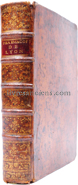
MATTIOLI, Per André.
Les commentaires de M. P. André Matthiolus, médecin senois, sur les six livres de Pedacius Dioscoride Anazarbeen, de la matière médecinale.
Lyon, Claude Prost, 1655.
More Details >
1200 €
Latest revised and corrected edition, expanded.
Translation from Latin into French by Antoine du Pinet.
The work comments on the six books of Dioscorides on medicinal materials, with additions on simple remedies, oils, distillations and the treatment of various diseases. Our edition is illustrated with a full-page portrait of the author and numerous small woodcuts in the text representing a large number of carefully engraved plants, as well as some crustaceans, fish, shellfish, insects, animals, scenes of country life. In fine, Brief discourse on the distillation of water with figures showing distillation apparatus. Mattioli, in addition to his work to match ancient botanical descriptions with contemporary botany, describes more than 100 new plants and notably one of the first European varieties of tomato.
RENOU, Jean de.
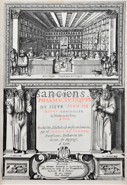
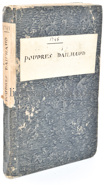
Les oeuvres Pharmaceutiques.
Lyon, Pierre Rigaud, 1624.
More Details >
Sold
Scarce first edition in french, translated from latin by Louis de Serres.
This work is considered as the bible of the apothecary (Dominique Kassel, La Pharmacie au Grand Siècle, p. 3).
Topics such as ethics and tooling tips are treated with a precision that has never been achieved.
That's why Renou's book, after having served as an ABC for several generations of pharmacists, has now become a valuable source of information for the history of pharmacy.
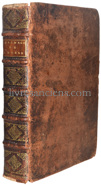
CAPELLO, Giovanni Battista.
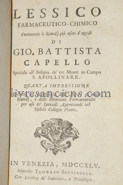
Lessico farmaceutico-chimico.
Venise, Tommaso Bettinelli, 1745.
More Details >
150 €
"Pharmacico-chemical Lexicon containing the most used remedies today" by Giovanni Battista Capello, Italian pharmacist.
Famous Italian pharmacopoeia which will be reissued throughout the eighteenth century, there are notably three theriac recipes.
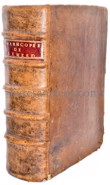
[TESSARI, Ludovico].
Materia Medica Contracta.
Venise, Nicolai Pezzana, 1762.
More Details >
450 €
First edition.
A rare work by Ludovico Tessari which proposes a pharmacopoeia classified according to the three kingdoms of nature: mineral, vegetable, animal.
For each compound, it is proposed the medical use that can be made.
Beautiful venitian print.
BARBEYRAC, Charles.
Medicamentorum constitutio seu formulae Caroli Barbeirac.
Lyon, Frères De Tournes, 1751.
More Details >
150 €
First edition.
Apocryphal work probably written from notes transmitted by Antoine Sidobre (16 ..- 1749) the nephew of Charles Barbeyrac (1649-1699) and put in order by students of the medical school of Montpellier.
Unusual pharmacopoeia.
STORCK, Antoine.
Observations nouvelles sur l’usage de la cigüe.
Vienne / Paris, P. Fr. Didot le jeune, 1762.
More Details >
150 €
Storck was one of the first to promote the internal use of hemlock for medical treatments. His experiments were instrumental in the controlled reintroduction of this poison into pharmacopoeia. He is famous for having conducted experiments on himself to test the boundary between therapeutic doses and toxic and lethal doses.
VITET, Louis.
Pharmacopée de Lyon ou exposition méthodique des médicaments simples et composés.
Lyon, Perisse, 1778.
More Details >
850 €
First edition.
BRUGNATELLI, Luigi-Vincenzo.
Pharmacopée générale à l'usage des pharmaciens et des médecins modernes, ou dictionnaire des préparations pharmaceutico-médicales simples et composées les plus usités de nos jours, suivant les nouvelles théories chimiques et médicales.
Paris, D.Colas, 1811.
More Details >
200 €
First french edition.
CHARAS, Moyse.
Pharmacopée Royale Galénique et Chymique.
Lyon, Anisson & Posuel, 1704.
More Details >
Sold
New revised edition corrected and enlarged by the author.
Pharmacist born in Uzès in 1618, Charas studied chemistry at Orange, then he came early to Paris, where he was appointed demonstrator in chemistry at the royal garden of the king.
His writings are still marked by the alchemical theories.
His pharmacy is the fruit of his lectures given in Paris and his studied. It had a great success, was reprinted many times and was translated into all European languages and even in Chinese for the convenience of the Emperor.
There are descriptions of many preparations, recipes and other remedies panacea.
Enlarged edition with at the end the "traité abrégé des eaux minérales de France."
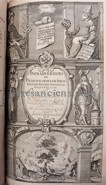
Allegorical engraved frontispiece six engraved plates of copper furnaces, tools, pots and retorts, chemical symbols, etc.
LEMERY, Nicolas.
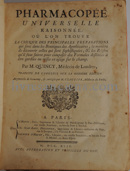
Pharmacopée universelle contenant toutes les compositions de pharmacie.
Avignon, Jean Delorme, 1716.
More Details >
450 €
Second edition augmented.
A fundamental treatise by Nicolas Lemery, a renowned French pharmacist and physician. This work presents a comprehensive overview of pharmaceutical preparations used in early 18th-century Europe, accompanied by a pharmaceutical glossary. Lemery is a major figure in modern chemistry and pharmacy.
QUINCY, John.
Pharmacopée universelle raisonnée.
Paris, D'Houry Père, Delespine & Laurent d'Houry, 1749.
More Details >
480 €
First french edition.
BATE, George.
Pharmacopoea Bateana.
Lyon, Apud Amabilem Auroy, 1704.
More Details >
200 €
George Bate (1608-1668) was physician to Charles I and II of England and Oliver Cromwell's family.
Unusual English pharmacopoeia.
FULLER, Thomas.
Pharmacopoeia extemporanea sive praescriptorum chilias.
Venise, Francisci ex Nicolao Pezzana, 1790.
More Details >
150 €
Following the pharmacopoeia of Fuller will find:
- FRAUNDORFF, Tabula Smaragdina medico-pharmaceutica, Venise, Joseph Orlandelli, 1790
- Thesaurus ludovicianus sive compendium materiae med. selectum ex. B. Ludovici pharmacia, sd, sl.
- JACKSON, Enchiridion medicum practicum sive tractatus de morborum praxi, Venise, Josephum Orlandelli, 1790.
ZWELFER, Johann.
Pharmacopoeia Regia, seu dispensatoium novum locupletatum et absolutum, annexa etiam mantissa spagyrica [...]
[suivi de]
Discursus Apologeticus Joannis Zwelferi, medicinae doct. adversus Hippocratem chymicum Ottonis Tackenii [...]
[suivi de]
Animadversiones in Pharmacopoeiam Augustanam et annexam ejus mantissam, sive Pharmacopoeia Augustana Reformata [...]
[suivi de]
Appendix ad Animadversiones in Pharmacopoeiam Augustanam, ejus que annexam mantissam [...].
Nuremberg, Michaelis & Johann. Friderici, 1668 - 1668 - 1667.
More Details >
Sold
This volume contains a collection of the most important pharmaceutical works of Johann Zwelfer (1618-1668, German physician, chemist and pharmacist). He is best known for correcting errors in the formulation of the remedies published in the "Pharmacopoeia Augustana", which corresponds to the "Augsburg Code" (a compilation of many remedies very commonly used by German physicians), and which he published in his "Animadversiones in Pharmacopoeiam Augustanam". He enjoyed great popularity, but was also much belittled by his German colleagues, such as Luc Schroeck.
His "Pharmacopoeia Regia" is an encyclopaedic pharmacopoeia.
PASSERAT DE LA CHAPELLE, Claude François.
Recueil des drogues simples ou matière médicinale.
Paris, D'Houry, 1753.
More Details >
500 €
First edition.
"It is after an examination of the principles of medicines, of their beneficial qualities, noted by a numerous and regular series of experiments and observations, that it is allowed to make use of them" (extract from the preface ).
Uncommon pharmacopoeia.
ROUSSEAU, Abbé.
Secrets et remèdes éprouvez dont les préparations ont été faites au Louvre.
Paris, Jean Jombert, 1697.
More Details >
Sold
First edition.
Work published posthumously by Rousseau de la Grangerouze, the brother of Abbot Rousseau, who was a Capuchin monk at the Louvre alongside Abbot Tranquille.
It contains the recipes for Baume Tranquille (a powerful sleeping pill based on Henbane, Poppy and Nightshade) and Rousseau's Laudanum, which made the reputation of the Capuchins of the Louvre.
Here he reveals the secret.
Note the experiment noted by Dorbon, which consisted of killing a toad by looking at it... an experiment that once almost turned out to be unfavorable for the abbot, a toad with a glowing red gaze having left him in a state of weakness for several days.
BUC'HOZ, Pierre-Joseph.
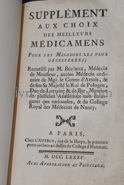
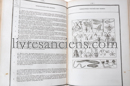
Supplément aux choix des meilleurs médicamens pour les maladies les plus désespérées.
Paris, Chez L'Auteur, 1785.
More Details >
80 €
First edition.
Continuation of the "Choice of the best medicines for the most desperate diseases", a work published the previous year. Pierre-Joseph Buc'hoz was a botanist, member of the Royal College of Medicine of Nancy and of many academies. From 1776 and until at least 1800, he self-published, distributing his prolific editorial production to his successive Parisian homes.
SMYTTÈRE, Philippe-Joseph-Emmanuel.
Tables synoptiques de l'histoire naturelle, pharmaceutique et médicale.
Paris, Librairie médicale de Crochard, 1833.
More Details >
450 €
Second edition.
Philippe-Joseph-Emmanuel de Smyttère (1800-1886) was a French physician, botanist and historian. His work, inspired by the classifications of Candolle, offers classification tables where medicinal properties are highlighted.
"I conceived the project of demonstrating, through application, the link that unites natural history to therapeutics" (extract from the preface).
ABANO, Pierre (d') || PARACELSE.
Traicté des venins.
Lyon, Jean Huguetan, 1593.
More Details >
Sold
First publication in French of the treatise De Venenis eorumque remediis liber attributed to Peter of Abano (or Petrus de Abano), a famous Italian physician and philosopher of the 13th century.
It contains short descriptions of various poisons and venoms, more or less strange: hemlock, mandrake, spider bite, cat brain, deer tail... As well as the means of treating them, starting with the use of the Bezoar, which is the subject of a dedicated chapter.
Lazare Boet, the translator, adds for the first time in French, Paracelsus' treatise on the virtues and marvelous properties of worms, serpents, spiders, toads, and dunces.
[MANUSCRIT] MAHOT, Maurice.
Traité de Botanique sur Estampes du Traité historique des Plantes de Buchoz classées suivant Tournefort & Linné.
[Nancy], [Buc'Hoz], [1762-1770].
More Details >
7000 €
Original manuscript of an unpublished botanical treatise by a learned scholar from Nantes.
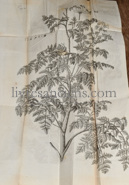
It presents botanical concepts as well as the classifications of Linnaeus and Tournefort. This manuscript, nearly 200 pages long, is written on the verso of the plates from Buc'hoz’s Flore Lorraine.
All plates are also annotated with details on plant names, their classification according to Linnaeus and Tournefort, and their medicinal uses—together forming a true pharmacopoeia.
These 187 plates were intended to illustrate Buc'hoz’s Traité historique des plantes qui croissent dans la Lorraine et les Trois-Évêchés, published in ten octavo volumes between 1762 and 1770. The plates, originally issued separately in installments and designed to be folded and bound in octavo, are gathered here in a single folio volume.
Buc'hoz, known for the beauty of his plates, had solicited financial support from fellow countrymen and botany enthusiasts for the production of these engravings. Thus, at the bottom of almost every plate, one finds the coat of arms and name of the sponsor who funded it.
Maurice Mahot, the author of this manuscript, sponsored plate 152.
While biographical information on Maurice Mahot “the elder” (1745–1810), a royal counselor, civil and criminal judge at the présidial, alderman (1777), and deputy mayor of Nantes (1779), offers little indication of an interest in natural sciences and botany, the same cannot be said of his son, Maurice Mahot “the younger” (1774–1842), a doctor of medicine and scholar who published several books on medicine and lexicography.
The annotations by the son—a physician—on the plates funded by the father—a botany enthusiast—explain the numerous pharmaceutical and medical recipes found in the work.
Another collector has left his name on the title page: Silas Boucher de la Ville Jossy, a member of a prominent Nantes family in the mid-19th century.
A fascinating manuscript, still largely unexplored, of exceptional character, both for the beauty of its annotated plates and for its content, which intertwines botanical classification and pharmacopoeia.
GLASER, Christophle.
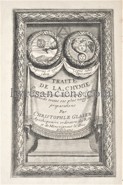
Traité de la Chymie.
Lyon, Pierre & Benoit Bailly, 1670.
More Details >
900 €
Third augmented edition.
Christophe Glaser (1629-1672?) Is a Swiss doctor and pharmacist who became ordinary apothecary of King Louis XIV. Nicolas Lemery will be trained at Glaser but quickly leaves him not supporting his almost esoteric teaching.
Glaser crosses the history in the poison case. It is most probably in her pharmacy that the Marquise de Brinvilliers obtained the vials of poison. According to his testimony Glaser was sent to Italy by Fouquet to learn the secrets of Italian poisons.
Caillet attributes this book to Moyse Charas, who indeed mentions in the preface to his Thériaque that he published a Treatise on Chemistry under the name of Glaser.
We find in this book, curious preparations such as human skull oil or the distillation of viper flesh.
AILHAUD, Jean.
Traité de l’origine des maladies et de l’usage de la poudre purgative.
Avignon, Esprit-Joseph Rousset, 1748.
More Details >
100 €
Third edition.
Jean d'Ailhaud (1675-1756), a native of Lourmarin, a doctor of medicine and surgeon, became famous throughout Europe for having invented a medicinal powder to which he gave his name and which brought him fortune. His Treatise is a veritable advertising brochure extolling the benefits of his powder. Copy duly signed by the author's son, associated with the Ailhaud powder business.
TAUVRY, Daniel.
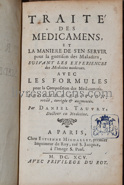
Traité des médicamens, et la manière de s’en servir.
Paris, Estienne Michallet, 1695.
More Details >
Sold
Second edition.
This medical-pharmaceutical treatise links pharmacology and clinical experience. Tauvry (1669-1701), a French physician and anatomist, combines recipes, pathologies, and dosages, reflecting the empirical evolution of modern medicine.
ORFILA, Mathieu.
Traité des poisons tirés des règnes minéral, végétal et animal, ou toxicologie générale.
Paris, Crochard, 1818.
More Details >
200 €
Second edition.
LUDWIG, Daniel || ETTMÜLLER, Michel.
Traité du bon choix des médicamens.
Lyon, Frères Bruyset, 1730.
More Details >
200 €
Second french edition.
Galenic Pharmacopoeia translated from texts by German physicians Ludwig (Ludovicus) and Ettmuller.
An important pharmacological treatise, originally published in Latin, intended to guide physicians and pharmacists in the judicious selection of medications. It provides practical and precise advice for choosing the most appropriate remedies for each condition based on their effectiveness, qualities, and potential toxicity.
FAVROT, C.
Traité élémentaire d'histoire naturelle pharmaceutique et médicale contenant la botanique, la zoologie, la minéralogie et la matière médicale.
Paris, Labé, 1843.
More Details >
120 €
First edition.
Book specially designed for students preparing for pharmacy and medicine exams with 500 figures in the text.
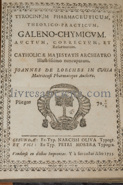
LOECHES, Juan.
Tyrocinium pharmaceuticum, theorico practicum, galeno-chymicum.
Barcelon, Joannis Jolis, 1751.
More Details >
450 €
Unusual work of an apothecary from Madrid who delivers us his pharmacopoeia (text in latin). Spanish books on pharmacy are rare.
LOECHES, Juan.
Tyrocinium pharmaceuticum, theorico practicum, galeno-chymicum.
Gerone, Narcissi Oliva, 1755.
More Details >
250 €
Unusual work of an apothecary from Madrid who delivers us his pharmacopoeia (in latin). Spanish books on pharmacy are rare.
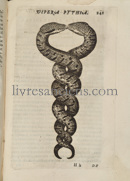
SEVERINO, Marco Aurelio.
Vipera Pythia id est, De Viperae Natura, Veneno, Medicina, Demonstrationes, et Experimenta nova.
Padoue, Pauli Frambotti, 1651.
More Details >
800 €
Second edition.
Marco Auelio Severino (1580-1656) was a prominent Italian anatomist and surgeon. In 1610, he was appointed professor of anatomy and surgery in Naples. His work, "Vipera Pythia," deals with venomous snakes, their anatomy, venom, and medicinal properties and virtues. It provides extensive information on the mythology, superstitions, and occult traditions surrounding snakes.
Many of the engravings, mostly full-page, depict mythological images as well as pagan deities, symbols, and idols associated with snakes.
Results (31 - 59) of
59
<
1
2
New
Price ↓
Price ↑
Author A-Z
Author Z-A
Title A-Z
Title Z-A
Date ↑
Date ↓
About
Sell your books
Contact
Newsletter
Blog
52 rue des Ecoles 75005 Paris
tel. +33 (0)1 43 54 22 23
contact@livresanciens.com
Terms and conditions
European VAT number: FR87515091171
© Eric Zink, Antiquarian Bookseller