
Newsletter
About
New arrivals
Sell your books
Cart
Contact us
Blog
Categories
Categories
Science
Astronomy
Chemistry
Mathematics
Physics
Natural History
Engineering
History of science
Medicine
Medicine
Pharmacy
Occult
Astrology
Alchemy
Occult
Social Sciences
Economy
History
Philosophy
Law
Theology
Arts & Architecture
Art & Artist's Books
Architecture
Litterature
Miscellany
Manuscripts
Fine bindings
Early printings
FREE SHIPPING WORLWIDE
WE ACCEPT
Physics
Results (1 - 30) of
140
1
2
3
4
5
>
New
Price ↓
Price ↑
Author A-Z
Author Z-A
Title A-Z
Title Z-A
Date ↑
Date ↓
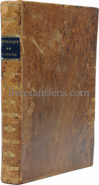
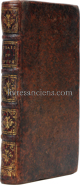
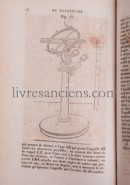
LAGRANGE, Joseph-Louis, comte de.
Méchanique analitique.
Paris, Veuve Desaint, 1788.
More Details >
10000 €
First edition of Lagrange's masterpiece, the foundation of modern mechanics, second in importance to Newton's Principia.
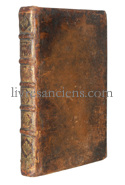
CHEVREUL, Michel Eugène.
De la Loi du Contraste simultané des Couleurs et de l’Assortiment des Objets colorés, considéré d’après cette Loi dans ses Rapports avec la Peinture, les Tapisseries des Gobelins, les Tapisseries de Beauvais pour Meubles, les Tapis, la Mosaïque, les Vitraux colorés, l’Impression des Étoffes, l’Imprimerie, l’Enluminure, la Décoration des Édifices, l’Habillement et l’Horticulture.
Paris, Pitois-Levrault, 1839.
More Details >
9000 €
First edition.
One of the most influential books on art in the 19th century.
Michel-Eugène Chevreul (1786–1889) is known to chemists for his research on fatty substances (1810–1823) and on immediate organic analysis (1824), but it is as a color theorist that his name achieved lasting fame.
De la loi du contraste simultané des couleurs introduced a scientific understanding of color that had a profound and lasting impact on the painters of his time.
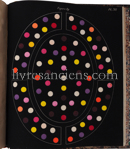
His “law” describes how the perception of a hue is altered by the surrounding colors, each color projecting its complementary onto its immediate environment (thus, a red object tends to cast a greenish glow on nearby surfaces, a yellow one a purplish tint, and so on). This principle is clearly illustrated in plate 7 of the Atlas, where colored dots on a white background seem to emit halos of their complementary hues.
Eugène Delacroix (1798–1863), a central figure of Romanticism, paid close attention to Chevreul’s research. According to the painter Paul Signac, Delacroix even sought to meet the chemist and acquired notes from his lectures in order to better grasp the law of simultaneous contrast. Several of his paintings feature harmonies built around complementary color pairs. For instance, The Entry of the Crusaders into Constantinople (1840) deliberately juxtaposes yellow/purple, blue/orange, and red/green to dramatize the scene—so effectively that art historian Lee Johnson called it an ideal “illustration” of Chevreul’s treatise.
But it was arguably within the Impressionist movement that Chevreul’s theories reached their highest artistic fulfillment. Claude Monet (1840–1926), in particular, used simultaneous contrast to heighten luminosity in his landscapes. He avoided black and earth tones, preferring instead to render shadows in color: purples and blues for shaded areas at sunset, accented with yellow-orange highlights in full light. This technique appears as early as Impression, Sunrise, the foundational work of the movement. One might also recall the poppy fields, a favorite motif of the Impressionists (Van Gogh, Monet, Pissarro…), where red flowers vibrantly stand out against green backgrounds.
A book heralding one of the greatest revolutions in painting.
Our copy is complete with all the color plates, most of them signed by Chevreul himself.
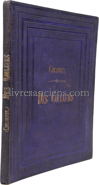
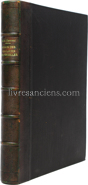
CHEVREUL, Michel Eugène.
Des couleurs et de leurs applications aux arts industriels à l’aide des cercles chromatiques. Avec XXVII planches gravées sur acier et imprimées en couleurs par René Digeon.
Paris, J.B. Baillière et Fils, 1864.
More Details >
5500 €
First edition of the rarest of Chevreul's publications on color.
Michel-Eugène Chevreul (1786-1889) is known to chemists for his research on fatty acids, saponification, and the discovery of stearin, but it is as a color theorist that his name will go down in history. Chevreul was appointed director of the Manufacture des Gobelins in 1824. Responsible for overseeing the production of dyes, he supported the work of dyers with his research on color perception. Thus, in 1839, he proposed a scientific approach to color complementarity and subsequently developed "color circles." A true "Pantone" color chart, a hundred years ahead of its time, Chevreul's color circles had the dual benefit of systematizing the production of hues (each with its own name) and making it easier to understand the concept of color complementarity. Thus, complementary colors are found on the same diameter of the color wheel, Red No. 2 corresponds to Green No. 2. "I believe I can affirm that it is possible to subject colors to a reasoned nomenclature, by relating them to types classified according to a simple method, accessible to the intelligence of all those who deal with colors" (extract from the preface). The standardization of color production was to interest first and foremost the industry then in full development, but it is undoubtedly in the Impressionist movement that Chevreul's theories found their finest accomplishment. Very early on, painters were inspired by Chevreul's work in their paintings, starting with Delacroix and then Monet. We will thus remember the fields of poppies dear to the Impressionists (Van Gogh, Monet, Pissaro...) where the red dots of the flowers burst out on complementary green backgrounds. The 27 spectacular plates were printed by René-Henri Digeon using chromochalcography, the process and difficulties of which are discussed in a paragraph in the book. Digeon appears to have presented a first edition of these plates at the 1855 World's Fair, for which he received a patent from the Empress. Several of the plates in our copy appear to be from this first edition and contain errors that have been corrected in other later copies that we have been able to consult.
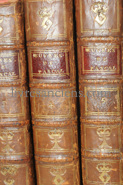
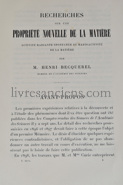
BECQUEREL, Henri.
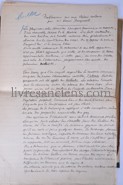
Manuscrit autographe : Reflexions sur une théorie moderne.
s.l., s.n., [1907].
More Details >
4000 €
Original Manuscript by Henri Becquerel.
An interesting manuscript in which the discoverer of radioactivity ponders the nature of matter at the end of his life.
This manuscript, with corrections for printing, was published at the Institut de France after a reading at the session of October 25, 1907.
One of Henri Becquerel’s final works, this manuscript reflects on the revolutionary discoveries that had upended the traditional understanding of matter: the electron (discovered by Thomson in 1897), radioactivity (discovered by Becquerel himself in 1896), and radioactive decay (discovered by Rutherford in 1902).
The long-held notion of the atom as an indivisible, stable particle, as proposed by Democritus, was challenged by these groundbreaking findings. Becquerel pondered this new reality, suggesting that atoms, rather than being eternally stable, might undergo modifications over time. However, the slow pace of these transformations or the rarity of conducive conditions could create the illusion of stability.
The 15 pages offprint will be joined (covers detached).
PASCAL, Blaise.
Traitez de l'équilibre des liqueurs et de la pesanteur de la masse d'air.
Paris, Guillaume Desprez, 1663.
More Details >
3500 €
First edition.
Milestone in the history of science in which Pascal discovers atmospheric pressure.
The famous experiment, carried out by his brother-in-law in Auvergne, consisted of comparing the height of a column of mercury in Clermont-Ferrand and then at the top of Puy-de-Dôme.
The question of the weight of the air was already under discussion in Descartes and Galileo, but it is Pascal with this experience who provides the proof. He thus broke with nearly 2000 years of Aristotelian physics: "Nature abhors a vacuum", more than a popular maxim then took the place of the only physical principle of hydrostatics.
"Nature has no repugnance for emptiness; she makes no effort to avoid it; all the effects that have been attributed to this horror proceed from the gravity and pressure of the air; she is the only one. real cause, and, lack of knowing it, we had invented this imaginary horror of emptiness on purpose, to make it right." (extract from chapter II)
Then pascal (Pa) will be adopted as the international unit of measurement of pressure.
MARAT, Jean-Paul.
Découvertes de M. Marat sur la lumière constatées par une suite d'expériences nouvelles qui ont été faites un très-grand nombre de fois sous les yeux de MM. les Commissaires de l'Académie des Sciences.
Londres et Paris, Jombert, 1780.
More Details >
3000 €
First edition of this rare work by Marat on light.
In fact, the french revolutionary published several scientific works in his youth.
In this treatise on light, Marat discusses Newton's doctrine on the decomposition of sunlight by the prism.
DESCARTES, René.
Le Monde de Mr Descartes ou le traité de la lumière et des autres principaux objets des sens.
Paris, Jacques Le Gras, 1664.
More Details >
3000 €
First edition.
Very rare copy with title page in unlisted condition in the name of Jacques Le Gras.
Descartes wrote this treatise in 1632 and 1633. He defended in particular the heliocentric system of Copernicus, but following Galileo's condemnation, he gave up publishing this work during his lifetime. It will not be finally published, according to his will, until after his death. At the end of 1663, the Le Gras and Clerselier family will dispute the privilege of publishing the posthumous works of Descartes. For the "World" it is Jacques Le Gras who will be the first to deposit the privilege. (cf. CARTESIAN BULLETIN V. (1976). Archives de Philosophie, 39 (3), 445–494) Jacques Le Gras, the holder of the privilege, then shared it with Thomas Girard (his brother-in-law) and Michel Bobin.
Our title page is unknown to Tchermerzine and Guibert as well as to Mathias Van Otegem who in his bibliography of the works of Descartes published in 2002, after consulting the copies in public libraries, describes only four states of the title page of this edition.
Our copy therefore presents a fifth state of the still unpublished title page.
Our title page has the same typographical mark as the Thomas Girad state (6 fleurons) canonically considered to adorn the true first edition. In addition, like the copy "Thomas Girad" from the Munich library (BSB: Rar. 4594) our title page is margined shorter than the rest of the book body and printed with the same characters, which suggests an impression at the same time.
The copies having a recomposed title page with a typographical mark "à l'oiseau" only coming, according to bibliographers, in a second step.
"In Le Monde, Descartes wants to ruin the concepts of scholasticism, and 'evacuate' Aristotle's physics, by giving a physical interpretation of the new heliocentric astronomy. As opposed to traditional finalism, he envisions, in the form of a "Fable", the mechanical formation of the cosmos, from an initial state of chaos (pieces of matter of various shapes and sizes agitated by all-out movements) and only by virtue of the general laws of nature: principle of inertia, laws of the communication of movement, etc ... "Robert Maggiori, Liberation, 26.
CHEVREUL, Michel Eugène.
Mémoire sur la vision des couleurs matérielles en mouvement de rotation et des vitesses numériques de cercles.
Paris, Firmin-Didot, 1882 [1881].
More Details >
3000 €
First edition of Chevreul's last works on color.
A rare offprint with its own title page published by Firmin-Didot in 1882, of an article presented to the Academy of Sciences in December 1880 and January 1881 (one generally only finds the article extracted from the Mémoires de l'institut published in 1883). Chevreul is interested here in physiological optics, trying to analyze how the contrast between complementary colors is affected by movement.
In his conclusion, in which he calls himself "the dean of students in France" (he was then 95 years old), he sees a direct application of his work to signaling for train drivers.
[VOLTA, Alessandro].
L'identita del fluido elettrico col cost detto fluido galvanico vittoriosamente dimostrata con nuove esperienze ed osservazioni. Memoria comunicata al Signore Pietro Configliachi Professore di Fisica sperimentale nell?Università di Pavia e da lui pubblicata con alcune note. Porta in fronte il ritratto di Volta e vi è aggiunto il Catalogo delle sue opere stampate sino a tutto l'anno 1813.
Pavia, G. Giovanni Capelli, 1814.
More Details >
Sold
First edition on large paper.
This is Volta's latest memoir and his most important contribution to the famous controversy that occurred between the Galvanic and Voltaic theories of electricity. This memoir was submitted under the name of one of the students of Volta in 1805 during a competition organized by the "Società Italiana delle Scienze"; it was then "to explain with clarity and dignity, by offending anyone, the question of Galvanism, discussed by Giovanni Aldini (nephew of Galvani) and Alessandro Volta". No memory was rewarded at the end of this event. Nine years later, Pietro Configliachi, professor of physics and publisher of the "Giornale di fisica, chemica e storia naturale" pupil and then successor of Volta at the University of Pavia, was finally able to publish this work. The last 7 pages of this book present a detailed bibliography of Volta's works until 1813.
Beautiful rare and remarkable copy on large paper.
DESCARTES, René.
Discours de la méthode pour bien conduire sa raison et chercher la vérité dans les sciences.
Plus la Dioptrique et les Météores qui sont des essais de cette méthode.
Paris, Michel Bobin & Nicolas Le Gras, 1668.
More Details >
Sold
The true third edition with the privilège dated 28 avril 1668.
PASCAL, Blaise.
Oeuvres de Blaise Pascal.
La Haye [Paris], Detune, 1779.
More Details >
2500 €
The first and sole ancient collective edition, partially original.
Published by Bossut, this edition is illustrated with a portrait and 14 plates.
Among the unpublished there are many "pensée", writings on Grace, the Treaty of vacuum and and extensive correspondence.
Volumes IV and V contain the scientific works.
We found the second printing of the describing of invention of the computing machine of Descartes (TIV, pages 7-30). The first edition, certainly printed by the author, is unobtainable (only two copies known).
Also of interest here is the reprint of Pascal's 1654 paper introducing his triangle of binominal coefficients (Pascal's Triangle), included in Volume V, pages 1-54. Pascal's invention "predated the concepts of computation of the values of polynomial functions by differences.".
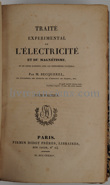
BECQUEREL, Antoine César.
Traité expérimental de l'électricité et du magnétisme, et de leurs rapports avec les phénomènes naturels.
Paris, Firmin Didot, 1834-1840.
More Details >
2200 €
Rare first edition of ono of the most important work of Becquerel.
GROLLIER DE SERVIÈRE, Gaspard.
Recueil d'ouvrages curieux de mathématique et de mécanique, ou description du cabinet de Monsieur Grollier de Servière avec des figures en taille douce.
Lyon, David Forey, 1719.
More Details >
2200 €
First edition.
Among the mechanical inventions depicted in Grollier de Serviere's Cabinet are those for propelling ships, making elevations, various kinds of clocks, lamps, mechanical figures, mills, optical contrivances and geometrical instruments.
MARIOTTE, Edme.
Oeuvres de Mr Mariotte, de l'Académie royale des Sciences.
Leide, Pierre Vander, 1717.
More Details >
1500 €
First collected edition, and first edition for the "Traité du mouvement des pendules" is published here for the first time.
Edme Mariotte was one of the pioneers of experimental physics in France and, with Newton, one of the great figures of European physics. His works bear witness to great originality and great diversity. In 1660 he undertook research on the elastic deformations of solids and laid down a law. In 1676, he also established the gas compressibility law which bears his name and formulated it in his treatise On the nature of air: at constant temperature, the volume of a gas varies inversely with pressure.
He also studied optics, hydrodynamics, fluid mechanics, as evidenced by his numerous writings on vision, colors (he opposed, like Hooke or Huygens, Newton's theory), weather forecasts , fluid movements, body shock ...
He also left his name to the "Mariotte spot", which is a part of the completely blind retina.).
CLAIRAUT, Alexis.
Théorie de la Lune, déduite du seul principe de l'attraction.
Paris, Dessaint & Saillant, 1765.
More Details >
1500 €
Second edition.
This second edition brings together the Theory of the Moon and the Tables of the Moon published by Clairaut in 1752 and 1754 which are the first approximate resolution of the three-body problem. Between 1747 and 1754, three of the greatest mathematicians of their time, Euler, D'Alembert and Clairaut, opposed each other on a common project: to develop new mathematical methods in order to resolve the complex problems posed by the movement of the Moon, subject to both to the gravitational pull of the Earth and the Sun. The issue was both scientific and economic since the establishment of precise astronomical tables was necessary for the reliability of navigation at sea.
PASCAL, Blaise.
Oeuvres de Blaise Pascal.
La Haye [Paris], Detune, 1779.
More Details >
1500 €
First and only old collective edition,
Published by Bossut, this edition is illustrated with a portrait and 14 plates.
Among the unpublished there are many "pensée", writings on Grace, the Treaty of vacuum and and extensive correspondence.
Volumes IV and V contain the scientific works.
We found the second printing of the describing of invention of the computing machine of Descartes (TIV, pages 7-30). The first edition, certainly printed by the author, is unobtainable (only two copies known).
Also of interest here is the reprint of Pascal's 1654 paper introducing his triangle of binominal coefficients (Pascal's Triangle), included in Volume V, pages 1-54. Pascal's invention "predated the concepts of computation of the values of polynomial functions by differences.".
MEAD, Richard.
De Imperio Solis ac Lunae in corpora Humana et Morbis inde oriundis.
Londres, Raphael Smith, 1704.
More Details >
1500 €
First edition.
Richard Mead (1673-1754), a physician and friend of Isaac Newton, attempts in this book to demonstrate the influence of gravitational forces on human health. Mesmer drew heavily on this book to write his doctoral thesis in 1766 (On the Influence of the Planets on the Human Body). The term "animal gravitation," taken from Mead, was later changed by Mesmer to "animal magnetism.".
NEWTON, Isaac.
Traité d'optique sur les réflexions, réfractions, inflexions et les couleurs de la lumière.
Paris, Montalant, 1722.
More Details >
Sold
Second French edition of this important work in which Newton sets out his theory of light, the study of the refraction and diffraction of light. He observes in particular that light is composed of a multitude of colors.
This edition is more sought after than the first because the translation by Pierre Varignon was revised and supervised by Newton himself.
Handwritten note at the end: "Bookplate Musei C.Dupré. 1 quarto volume purchased on April 2, 1779"
An old handwritten note states that this copy was purchased on May 2, 1863, at the library sale... and placed to their proper place the plates that had been incorrectly inserted by the bookbinder.
ALEMBERT, Jean Le Rond d’.
Reflexions sur la Cause generale des Vents. Piéce qui a remporté le Prix proposé par l'Académie Royale des Sciences de Berlin, pour l'Année 1746.
Paris, David l'aîné, 1747.
More Details >
1500 €
First edition of this important work on atmospheric tides.
AMPERE, André Marie || BABINET.
Exposé des nouvelles découvertes sur l’électricité et le magnétisme.
Paris, Méquignon-Marvis, 1822.
More Details >
1250 €
First edition, separately-paginated offprint of this early publication on electricity and magnetism in which Ampère and Babinet review the latest discoveries concerning electromagnetism.
Papper first published as a supplement to the French translation by Jean-René-Denis-Alexandre Riffault of the fifth edition of Thomas Thomson's Système de chimie.
Ampère notably presents his famous rule called "Ampère's rule" which describes the direction in which a magnetized needle moves near a conducting wire in which a current flows. His galvanometer, a device for measuring current intensity. As well as the idea of an electric telegraph system.
Book that bears witness to the excitement caused among physicists by Oerstedt's experiment in 1820 which opened a new scientific field, electromagnetism.
A very complete copy of the last leaf (table and errata) which is usually missing.
PAUCTON, Alexis-Jean-Pierre.
Théorie de la Vis d'Archimède, de laquelle on déduit celle des moulins conçus d'une nouvelle maniere. On y joint la construction d'un nouveau lock ou sillometre, & celle d'une sorte de rames très-commodes.
Paris, J.H. Butard, 1768.
More Details >
1200 €
First edition.
Unusual work in which Paucton seeks to improve and diversify the applications of the Archimedes screw. Among his innovative ideas we note the possibility of using the Archimedes screw as a means of propulsion for boats and as a propeller for windmills. By putting this propeller which he calls pterophore horizontally, he re-elaborates with genius Leonardo da Vinci's flying propeller, and even calculates the surface of canvas that it would take for a man to be able to rise in the air in this way.
A book on the origins of the helicopter.
RAMEL, Abraham Louis.
Système métrique, ou Instruction abrégée sur les nouvelles mesures, avec des calculs qui leur sont relatifs, et des tables de comparaison pour réduire les nouvelles mesures en anciennes et les anciennes en nouvelles; suivis d'une instruction sur les nouvelles monnaies de France, ainsi que d'une description abrégée des poids et mesures de Berne et de Lausanne.
Neuchatel, Mme Fauche Née Borel, 1808.
More Details >
1200 €
First edition.
Book promoting the use of the metric system in Switzerland. If Switzerland received in 1801 a copy of the standard meter deposited in Paris, the metric system took several decades to be adopted in all the cantons of the confederation.
"Besides the description that my book gives of the new and old measures of Paris, it can also be considered as a complete treatise of three kinds of measures; namely, those of Neuchâtel, Bern and Lausanne: these neighboring countries will doubtless also adopt under little this system, which has simplicity as its basis" (excerpt from the preface)
Beautiful copy in contemporary morocco.
CHERUBIN D'ORLEANS, Père.
Effets de la force de la contiguité des corps par lesquelles on répond aux expériences de la crainte du Vuide, & à celles de la Pesanteur de l'Air.
Paris, Etienne Ducastin, 1689.
More Details >
950 €
First edition, re-issue with cancel title (first issue 1679 with the imprint of Couterot, an other in 1689 of Lucas).
In this work, Chérubin d'Orléans discuss of the air-pump experiments of Pascal and Torricelli. He thought that vaccuum doesn't exist.
[LAMY, Dom Francois].
Conjectures physiques sur deux colonnes de nüe qui ont paru depuis quelques années & sur les extraordinaires effets du tonnerre.
Paris, Veuve de Sébastien Mabre-Cramoisy, 1689.
More Details >
Sold
First edition.
Illustrated with a folding plate and four figures in the text, two of which are full-page.
Lamy studies here two "lightning strikes" that had left their mark, the first on April 26, 1676 in Soissons had left an astonishing frieze (which is reproduced on the folding plate) in the dormitory of an Abbey. The second in Lagny on July 18, 1689, where lightning had struck the altar of the Church of Saint-Sauveur and imprinted the canon of the mass on its tablecloth.
Camille Flammarion devotes an entire chapter in his book "Les Caprices de la foudre" to Lamy's observations, and tells us: "A monk, Father Lamy, of the Congregation of Saint-Maur, published in 1696 [Editor's note: 2nd ed.] an excellent pamphlet, dictated by the clearest common sense, on the curious effects of lightning, which were then the subject of the most superstitious commentaries. Voltaire could not have reasoned better.".
MARAT, Jean-Paul.
Oeuvres de Marat.
I. Recherches Physiques sur l'Electricité.
II. Mémoire sur l'électricité médicale.
Paris, Clousier - Méquignon, 1782-1784.
More Details >
950 €
First edition of two rare books from Marat on electricity.
I. "Recherces Physiques sur l'Electricité". Paris. Clousier. 1782.
II. "Mémoire sur l'électricité médicale". Paris. Méquignon. 1784.
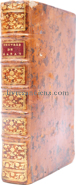
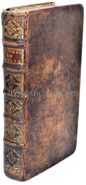
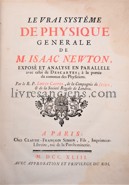
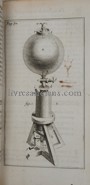
CASTEL, Louis-Bertrand || [NEWTON - DESCARTES}.
Le vrai système de physique générale de M. Isaac Newton exposé et analysé en parallèle avec celui de Descartes.
Paris, Claude-François Simon, 1743.
More Details >
950 €
First edition.
CAUCHY, Augustin Louis || ACADÉMIE ROYALE DES SCIENCES.
Mémoires sur la théorie des nombres . IN. Mémoires de l'Académie Royale des Sciences de l'Institut de France. Tome XVII.
Paris, Firmin Didot, 1840.
More Details >
950 €
Mémoire sur la Théorie des Nombres, Présenté a l'Académie des Sciences, le 31 Mai 1830, par M. Augustin Cauchy.
First edition of this important memoir (pp/ 249 to 768 of this volume of memoirs of the academy of sciences).
The writing of this memoir is quite abrupt, with a succession of formulas difficult to relate to each other, and it will be criticized by Biot in particular.
However, Jenny Boucard, after an in-depth study of Cauchy's work, concluded that Cauchy exposes a coherent method around the quadratic forms 4p^μ=x²+ny² which he applies in different cases, depending on whether n is prime or compound. (Boucard, p.365).
This volume of the Mémoires de l'Académie Royale des Sciences contains :
PONCELET : Théorie des effets mécaniques de la turbine Fourneyron.
TURPIN :
- Mémoire sur les différences qu'offrent les tissus cellulaires de la pomme et de la poire ...
- Mémoire sur la cause et les effets de la fermentation alcoolique et acéteuse.
- Recherches microscopiques sur divers laits ...
BECQUEREL : Nouvelles recherches sur le dégagement de la chaleur dans le frottement
CAUCHY. Mémoires sur la théorie des nombres.
BIOT. Mémoire sur l'existence d'une condition physique qui assigne à l'atmosphère terrestre une limite supérieure d'élévation qu'elle ne peut dépasser.
CHEVREUL. Recherches physico chimiques sur la teinture
And the Flourens' historical praise of Jussieu and Arago's praise of James Watt.
POLINIERE, Pierre.
Expériences de Physique.
Paris, Jean de Laulne, 1709.
More Details >
950 €
First edition.
Pierre Polinière is considered the founder of experimental physics in France. After studying mathematics with Pierre Varignon (1654 – 1722), Polinière opened a physics course at the college of Harcourt, it was one of the first public courses given in Paris. His public demonstration sessions were very successful and did much to disseminate the scientific method of experimental research. His experiments were very popular and, among the spectators, we found all of Paris, and even the young Louis XV in 1722.
In 1706 during an experiment before the Academy of Sciences, Polinière discovered electroluminescence. This discovery is contemporary but independent of that of Hauksbee in London.
The protocol of the experiment is described here in the chapter “Phosphorus through Movement”.
PARDIES, Ignace Gaston.
Discours du mouvement local. Avec des remarques sur le Mouvement de la Lumière.
Paris, P. Fr. Gueffier, 1674.
More Details >
900 €
Second enlarged edition.
Pardies was at the heart of the debates concerning the nature of light, corresponding with Newton, Leibniz, and Huygens. Before Huygens, he was the first to propose a detailed and well-argued theory based on the wave nature of light.
In 1670, Pardies sent a draft of his "discours sur le mouvement d’ondulation" to Huygens. This treatise was, for the Dutch scholar, who acknowledged it, an important source of inspiration in his conception of light, which he published much later, in 1690.
Pardies died on April 21, 1673, at the age of 36, from a fever contracted while visiting the sick at the Bicêtre hospice. His work on optics is known only indirectly, through the commentaries of his colleagues, but especially through the publication in 1682 by the Jesuit Father Pierre Ango of the work "Optics," inspired by the papers of Pardies that he had in his possession.
This second edition of his "Discourse on Local Movement" is interesting because it is expanded (compared to the first of 1670) with "Remarks on a letter from Mr. Descartes concerning light," in which, on p. 174, he hypothesizes that a sound would form in the sun and that the wave thus created would be transported to Earth.
GERDIL, Hyacinthe-Sigismond.
Dissertations sur l'incompatibilité de l'attraction et de ses différentes loix, avec les phénomènes et sur les Tuyaux capillaires.
Paris, Desaint et Saillant, 1754.
More Details >
900 €
Born in Savoy, in 1718 Gerdil was appointed Cardinal in 1777, and could have been Pope after the death of Pie VI, without the Austrian veto who does not want a French Pope.
This is not only a theologian, a philosopher, a moralist, a jurist, but also a mathematician and physicist. He has published several essays on the highest questions of mathematics and physics.
In "Essays on the incompatibility ...", are explained, according Montucla, the best objections against the Newtonian theory on attraction.
Not more than Fontenelle and Mairan, Gerdil rejects Newton's calculations, but it pushes the cause he assigns to the phenomena.
At this "dark and mysterious" attraction he opposes the clarity with which the tendency to conceive of bodies towards each other, under the mass of material, by which the motion is communicated successively and continuously from one to another.
RARE FIRST EDITION. Very good copy.
Results (1 - 30) of
140
1
2
3
4
5
>
New
Price ↓
Price ↑
Author A-Z
Author Z-A
Title A-Z
Title Z-A
Date ↑
Date ↓
About
Sell your books
Contact
Newsletter
Blog
52 rue des Ecoles 75005 Paris
tel. +33 (0)1 43 54 22 23
contact@livresanciens.com
Terms and conditions
European VAT number: FR87515091171
© Eric Zink, Antiquarian Bookseller