
Categories

Natural History - Botany - Gardening

Results (1 - 30) of 136
TilesList
Photo VARELA, Francisco. 

First edition.

Francisco Varela (1946 - 2001) was a Chilean neurobiologist whose work in theoretical biology and cognitive science had an influence far exceeding his initial fields of study and thus influenced the field of artificial intelligence research.

Francisco Varela’s Principles of Biological Autonomy was a groundbreaking text when it was first published in 1979, putting forth a novel theory of how living systems produce and maintain themselves.

This foundational book introduces the key concept of autonomy derived as an elaboration of the idea of autopoiesis (the self-production and self-distinction) of living organisms.

Varela covers topics in systems theory, neuroscience, theories of perception, and immune networks and offers a participatory epistemology that goes on to be further developed in later enactive literature. (The MIT Press, 2025).

These ideas are compelling not only for historical reasons but also because they still illuminate current efforts in developing the enactive approach toward wider and more challenging goals (including language, human cognition, ethics, and environmentalism).

Varela’s ideas continue to shape cognitive science through the ongoing development of the enactive approach, which today encompasses accounts of various aspects of cognition and is becoming an increasingly influential framework. Yet it’s often forgotten how deeply Varela’s work was grounded in a conception of biological autonomy. So much so, in fact, that the label enactivism is frequently invoked without reference to its foundational commitment to autonomy.

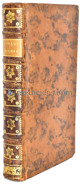
Photo [MANUSCRIT] MAHOT, Maurice. 

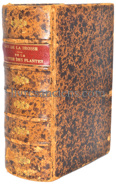
Original manuscript of an unpublished botanical treatise by a learned scholar from Nantes.
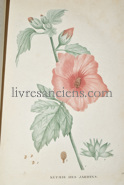
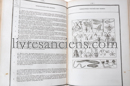
It presents botanical concepts as well as the classifications of Linnaeus and Tournefort. This manuscript, nearly 200 pages long, is written on the verso of the plates from Buc'hoz’s Flore Lorraine.
All plates are also annotated with details on plant names, their classification according to Linnaeus and Tournefort, and their medicinal uses—together forming a true pharmacopoeia.
These 187 plates were intended to illustrate Buc'hoz’s Traité historique des plantes qui croissent dans la Lorraine et les Trois-Évêchés, published in ten octavo volumes between 1762 and 1770. The plates, originally issued separately in installments and designed to be folded and bound in octavo, are gathered here in a single folio volume.
Buc'hoz, known for the beauty of his plates, had solicited financial support from fellow countrymen and botany enthusiasts for the production of these engravings. Thus, at the bottom of almost every plate, one finds the coat of arms and name of the sponsor who funded it.
Maurice Mahot, the author of this manuscript, sponsored plate 152.
While biographical information on Maurice Mahot “the elder” (1745–1810), a royal counselor, civil and criminal judge at the présidial, alderman (1777), and deputy mayor of Nantes (1779), offers little indication of an interest in natural sciences and botany, the same cannot be said of his son, Maurice Mahot “the younger” (1774–1842), a doctor of medicine and scholar who published several books on medicine and lexicography.
The annotations by the son—a physician—on the plates funded by the father—a botany enthusiast—explain the numerous pharmaceutical and medical recipes found in the work.
Another collector has left his name on the title page: Silas Boucher de la Ville Jossy, a member of a prominent Nantes family in the mid-19th century.
A fascinating manuscript, still largely unexplored, of exceptional character, both for the beauty of its annotated plates and for its content, which intertwines botanical classification and pharmacopoeia.

Results (1 - 30) of 136
TilesList
52 rue des Ecoles   75005 Paris
tel. +33 (0)1 43 54 22 23
European VAT number: FR87515091171
© Eric Zink, Antiquarian Bookseller